



Single-use packaging has become an integral part of everyday life. Fast delivery, ready-made food, cosmetics, drinks — all of it comes in packaging designed for one-time use. The convenience is obvious, but there’s a price to pay: polluted environments, overflowing landfills, plastic in the oceans, and even in the human body. A logical question arises: which packaging materials can really be considered eco-friendly, and is there an alternative to single-use plastic?
Why Single-Use Packaging Is a Problem
Mass production of single-use packaging began in the second half of the 20th century, and its use has only grown since. Today, more than 400 million tons of plastic are produced globally every year, and about 40% of that is packaging.
The problem is not only in the volume, but also in the fact that most packaging cannot be recycled. It contains layers of different materials, glues, pigments, and is often contaminated with food residue. All this makes recycling either economically unviable or technically impossible.
Where the Waste Accumulates and How It Affects the Environment
- Landfills. The majority of packaging waste ends up in landfills, where it can take hundreds of years to decompose, releasing methane and toxic substances into the soil and air.
- Oceans. According to scientists, over 11 million tons of plastic enter the oceans every year. It breaks down into microplastic, which ends up in marine animals and comes back to humans through the food chain.
- Air and soil. Incinerating packaging without filters leads to emissions of dioxins and heavy metals that pollute the environment.
What Makes Packaging Eco-Friendly
Eco-friendly packaging is not just “non-plastic.” It should meet the following criteria:
- Low carbon footprint during production
- Ability to be recycled or composted
- Biodegradability without harming nature
- Reusability or replacement of a single-use function
- Minimal chemical additives
5 Truly Eco-Friendly Materials
Here are five materials that can be considered relatively safe for the environment when used properly:
1. Kraft Paper and Cardboard
- ✅ Decomposes within 2–6 months
- ✅ Recyclable
- ⚠️ Downside — requires a lot of water and wood to produce
2. Biodegradable Plastic (PLA, PHA)
- ✅ Made from corn starch, sugarcane, and other renewable sources
- ✅ Decomposes in industrial composters within 60–90 days
- ⚠️ Not compostable at home; requires specialized conditions
3. Mushroom (Mycelium) Material
- ✅ Grown from agricultural waste
- ✅ Fully biodegradable and compostable
- ⚠️ Limited in production scale and shelf life
4. Glass
- ✅ Reusable and infinitely recyclable without loss of quality
- ⚠️ Heavy and energy-intensive to produce
5. Metal (Aluminum)
- ✅ Highly recyclable (up to 95% of aluminum cans can be recycled)
- ✅ Almost no loss in quality during recycling
- ⚠️ Expensive to produce and requires a lot of energy in the first cycle
What Should Not Be Considered “Eco-Friendly”
- Pseudo-eco packaging. Plastic items made to look like paper, or “bioplastic” that doesn’t actually decompose without high heat and humidity
- Composite packaging. Paper cups with plastic lining inside cannot be recycled
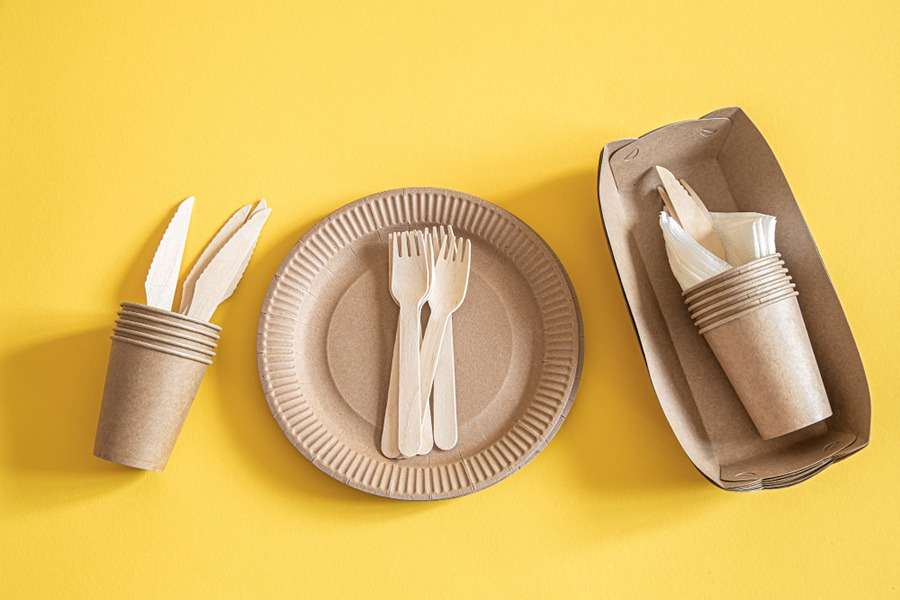
- Single-use alternatives. Paper straws, disposable wooden cutlery — only conditionally eco-friendly. Their production still consumes resources and harms when used on a massive scale
What You Can Do Right Now
To reduce the impact of single-use packaging on the environment, you can start with simple steps:
- Buy products in your own containers — jars, pouches, containers
- Choose items with minimal or recyclable packaging
- Avoid products packed in multilayer plastic
- Use reusable bags, bottles, and tableware
- Support brands that use sustainable packaging solutions
The Future of Packaging Depends on Responsible Choices
Solving the problem of single-use packaging requires effort not only from manufacturers but from every consumer. Conscious choices in favor of reusable or eco-friendly packaging can influence demand and push the industry toward change. It’s important to understand that even the most “green” material won’t save the planet if it’s used in a “take–use–throw away” model.