




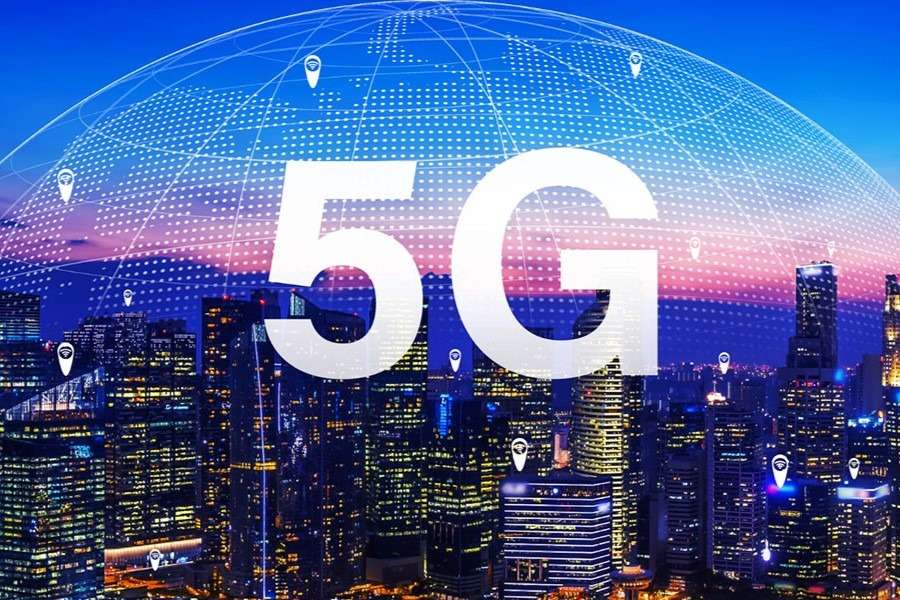
The world is changing rapidly, and mobile communication technologies play a key role in this transformation. The emergence of 5G has opened a new era of communications, providing data transfer speeds tens of times higher than in previous-generation networks. This is not just an update to the mobile internet standard — it is a technology that will influence the development of business, transportation, medicine, entertainment, and many other sectors.
In this article, we will explore how 5G works, what opportunities it offers, how it differs from previous standards, and what we can expect in the near future.
What 5G Is and How It Differs
5G is the fifth generation of mobile communication, providing significantly higher data transfer speeds, lower signal latency, and more stable connectivity. The main differences from 4G are:
- Higher speed — up to 10 Gbps, which is 10–20 times faster than LTE.
- Minimal latency — around 1 ms, which is especially important for online gaming, video conferences, and remote device control.
- Higher bandwidth — the network can simultaneously handle more devices without losing signal quality.
New Opportunities with 5G
The introduction of 5G opens up many new scenarios for using mobile technologies:
- Development of Smart Cities
High-speed internet will allow real-time management of urban infrastructure — from traffic light control to air quality monitoring. - Internet of Things (IoT)
5G enables stable connections for millions of devices — from smartwatches to self-driving cars. - Telemedicine
Thanks to high speed and low latency, doctors will be able to conduct remote consultations and even perform surgeries. - VR and AR Technologies
5G will make more realistic virtual worlds and advanced digital services possible in entertainment, education, and work.
Prospects for 5G Implementation
Analysts predict that within the next five years, 5G will become the primary mobile communication standard. Its development will transform not only the smartphone market but the entire digital technology ecosystem. Expected changes include:
- Industrial automation — factories will gain access to precise monitoring and remote control of equipment.
- Development of autonomous transportation — self-driving cars will be able to exchange data instantly, improving road safety.
- Evolution of business models — with stable connectivity, companies will create new online services and products.
Challenges and Limitations
Despite its clear advantages, the implementation of 5G comes with several challenges:
- High cost of equipment and infrastructure.
- The need for mass device upgrades to support the new standard.
- Cybersecurity concerns — a larger number of connected devices requires stronger data protection.
5G is not just faster internet but a technology that changes the rules of the game in the world of digital communications. In the coming years, it will become the foundation for the development of artificial intelligence, the Internet of Things, autonomous transportation, and smart cities.
The future of connectivity has already begun, and 5G will become a key factor in transforming the way we live, work, and communicate.