




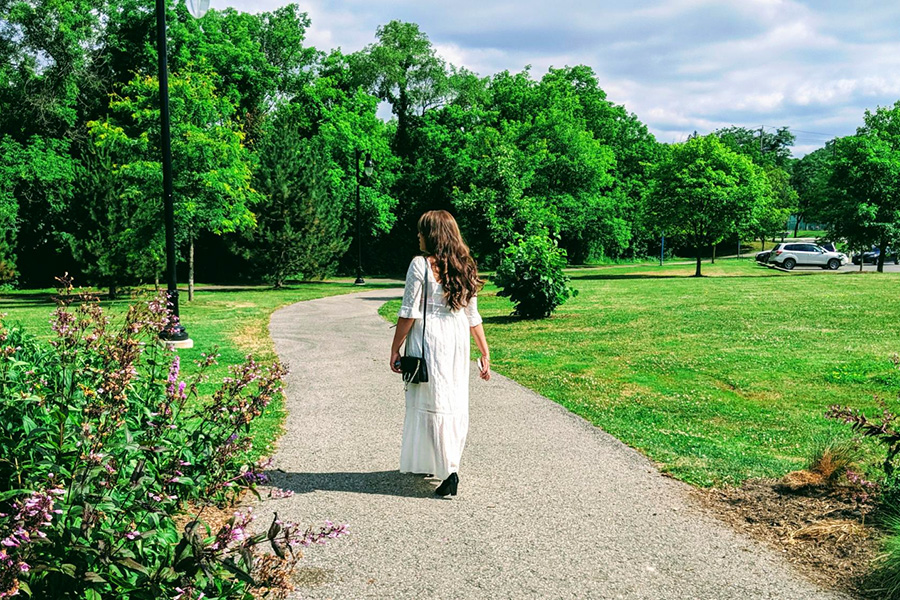
We are used to the idea that every minute should be productive. Even walks often turn into workouts with a step counter or phone calls on the go. But what happens when a person simply walks without a goal? Not rushing anywhere, not thinking about anything in particular. It turns out that in such moments, the brain launches amazing processes that can improve our mental state, thinking, and even creative abilities.
What Happens in the Brain During an Aimless Walk
When we move without a specific task, our brain switches to the so-called “default mode network” (DMN). This is a special network of brain areas that activates when a person is not focused on the outside world and allows thoughts to wander freely.
In DMN mode, areas responsible for the following are activated:
- self-reflection
- memories
- imagination
- creative thinking
- emotional processing of experiences
Simply put, during an aimless walk, the brain “puts things on shelves,” analyzes the past, fantasizes about the future, and searches for new connections between ideas. And all this — without pressure, rush, or external stimuli.
Why Aimless Walks Are Beneficial
Here are 7 reasons why you should go for a walk without a route or plan more often:
1. Mood Improves
During movement, endorphins — the hormones of pleasure — are released. And the absence of pressure and goals reduces the level of cortisol (the stress hormone). The result: lightness in the head and inner calm.
2. Mental Tension Goes Away
The brain gets a break from constant concentration, planning, and analysis. It’s like a system reboot — even complex problems are easier to solve after such a walk.
3. Creativity Is Stimulated
Studies have shown that walking increases divergent thinking — the ability to find unconventional ideas and solutions. Especially if you walk without a goal and let your thoughts wander.
4. Connection With Yourself Strengthens
We are too often distracted by external stimuli — news, social media, tasks. But an aimless walk helps return to yourself, hear your inner voice, and understand what you really want.
5. Emotions Are “Digested”
During a slow walk, brain areas are activated that help process and release negative experiences. It’s like psychotherapy in motion.
6. Memory and Attention Improve
The free-thinking mode strengthens neural connections related to long-term memory. In addition, nature walks increase the ability to concentrate once back at work.
7. A Feeling of Freedom Appears
In a world where everything is subject to schedules and algorithms, the freedom to just walk is an act of inner liberation. An aimless walk is a small rebellion against constant productivity.
How to Turn a Walk Into a Therapeutic Practice
To get the most benefit, just follow a few simple principles:
- Keep your phone in your pocket. Don’t take pictures, don’t check notifications. Give your brain silence.
- Don’t plan a route. Let your feet lead you. Explore streets, parks, or just walk in circles — it doesn’t matter.
- Pay attention to sensations. Notice your breathing, smells, light, sounds. This helps ground you and feel the present moment.
- Don’t judge your thoughts. If you recall the past or daydream — that’s fine. The main thing is not to cling to specific thoughts.
- Repeat regularly. Even 15–20 minutes a day can change your internal state for the better.
Why Specifically “Aimless” Walks, and Not Just Any?
You might think that any walk is good. And that’s true. But when we walk with a task — to buy something, walk the dog, go to the gym — the brain works differently. It focuses on the goal, tracks time, analyzes the route. That doesn’t let it switch into a free mode.
It’s the absence of a goal that makes such walks special. The brain lets go of control, starts to “wander” — and in that chaos, new ideas, solutions, and self-understanding are born.
An aimless walk is the simplest way to restore inner balance, mental clarity, and creativity. Time spent “for nothing” actually works for you. It’s not laziness and not a waste of time — it’s an investment in mental health and the development of thinking. Leave the destination alone. Just walk. It’s right there, in the emptiness, that the most important things are born.