

Hi! If you’ve ever cooked pasta, you know this pain: instead of a loose, beautiful texture — a lump of dough. Today we’ll figure out what to do to keep pasta from sticking together. Everything is laid out clearly, without boring theory, and with real practical tips.
Why Pasta Sticks Together
Before fixing the problem, let’s understand where it comes from. Here are the main reasons why pasta turns into an inedible mass:
- Not enough water. The less water, the higher the starch concentration — and starch is what makes pasta stick.
- You didn’t stir it in the beginning. The first minutes are crucial!
- Overcooked. The flour breaks down and it all turns into mush.
- Forgot to salt the water. Salt is not only for flavor but also for structure.
- Left pasta without oil after draining. Mistake number one.
What to Do to Keep Pasta from Sticking Together: Step-by-Step
Here’s a proven algorithm — from boiling to serving:
1. Lots of water — at least 1 liter per 100 grams
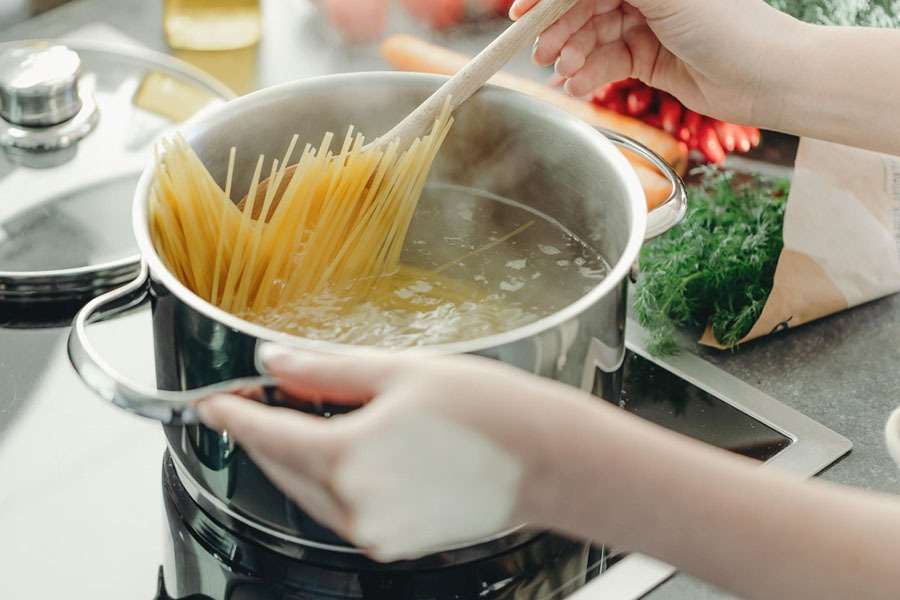
This is important! Pasta should float freely, like in a jacuzzi. If there’s too little water, the starch has nowhere to go and coats everything.
2. Salt the water after it starts boiling
Salt strengthens the surface of the pasta and improves flavor. About 1 tablespoon per 3 liters of water. Add it too early — and you slow down the boil.
3. Only into boiling water
Add pasta exclusively to vigorously boiling water. Otherwise, it will start falling apart even before cooking — and no magic will save it.
4. Stir immediately — don’t be lazy
The most critical part: stir intensively during the first 1–2 minutes. This is when pasta releases the most starch.
5. Set a timer — and don’t walk away
Cook strictly according to the package instructions. If you want it slightly firmer — remove it 1 minute earlier. Al dente not only sounds nice — it helps pasta hold its shape.
6. Drain the water and act immediately
Pasta doesn’t like waiting. Drain the water — then instantly add a little olive oil or a piece of butter. Mix. That’s it — it won’t stick now.
7. Straight into the sauce — the ideal option
If your sauce is already ready, pour the pasta straight into it right after cooking. No extra pots or pauses.
Table: How Different Types of Pasta Behave
| Type of pasta | Prone to sticking | Cooking tips |
|---|---|---|
| Spaghetti | Yes | Lots of water, stir actively |
| Penne | Medium | Good stirring and sauce afterward |
| Fettuccine | Yes | Cook al dente, add oil after |
| Elbow macaroni | Often | Stir quickly, don’t overcook |
| Rice pasta | Very prone | Rinse with cold water after cooking |
What to Do to Keep Pasta from Sticking: Common Mistakes and Myths
Let’s talk about what you shouldn’t do if you want to understand what to do to keep pasta from sticking.
- ❌ Adding oil to the water while cooking — this is a myth. Oil prevents the sauce from “clinging” to the pasta later. Better add it at the end.
- ❌ Rinsing regular pasta with water — only if you’re making a salad. For warm dishes, this kills the flavor.
- ❌ Letting pasta sit in a colander for too long — it will stick together in literally a minute.
- ❌ Reheating on a dry pan — sticking is guaranteed.
Professional Tips to Prevent Pasta From Sticking
🎯 Chef’s secret #1: Warm the plate before placing the pasta on it. This prevents it from cooling and sticking.
🎯 Chef’s secret #2: Add a little pasta water to the sauce. The starch improves consistency and helps it cling.
🎯 Chef’s secret #3: Use a pan instead of a pot to combine pasta and sauce. It’s easier to heat and mix evenly.
Frequently Asked Questions
Can you cook pasta in a multicooker?
Yes, but it’s harder to control stirring and timing. A pot is better.
How long can cooked pasta be stored?
No more than 24 hours. But reheat with sauce or butter before serving — otherwise it will stick.
Can you use butter instead of olive oil?
Yes, especially for pasta with cheese or mushrooms. Just don’t overdo it.
Conclusion: What to Do to Keep Pasta from Sticking
- Water: at least 1 liter per 100 g
- Salt: after boiling
- Cooking: strictly by time
- Stirring: immediately, actively
- Oil: right after draining
- Sauce: add directly to hot pasta
Now you’re fully armed. If someone near you cooks pasta and ends up with glue again — you know what to do to keep pasta from sticking. Share this article and spread the knowledge. Enjoy your delicious dinners!