



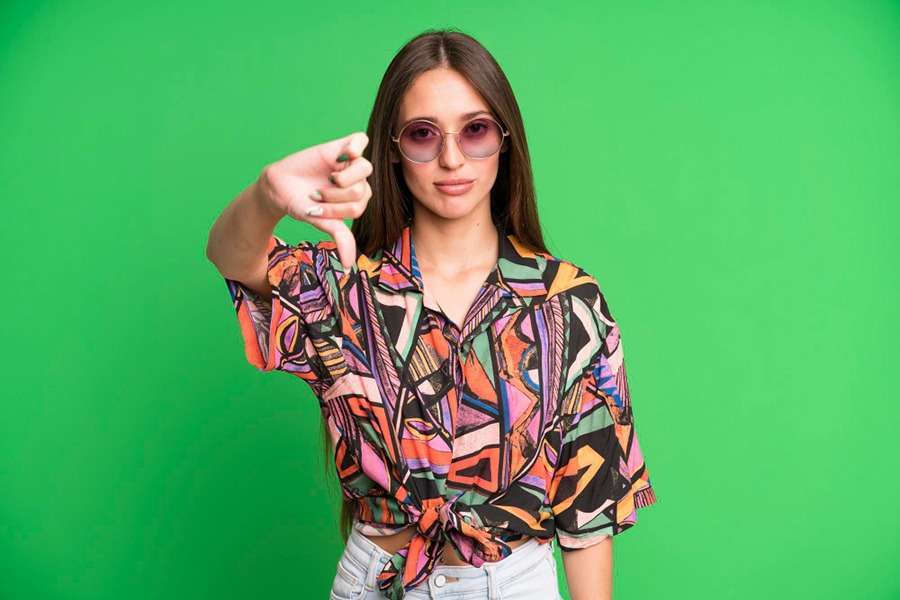
Fashion often offers bold, bright and experimental solutions, but not every one of them can make a look strong. Some trends live only on runways or in photoshoots. In real life they distort proportions, cheapen the look or simply fall out of the logic of style. Below is an analysis of fashion elements that can ruin even a well planned wardrobe.
Loud logos and the attempt to look status
Logomania returns every few years, but in everyday life it rarely works as intended. Huge letters on the chest, a bag turned into a billboard or a belt with a screaming buckle look more insecure than status. Style does not need proof, it is read in fit, colors and fabric quality. A logo can be present, but let it be a part of the look, not the center of the entire composition.
Complex shapes that do not get along with everyday life
On the runway designers experiment with structure, volumes and odd geometry. In life such items often look cumbersome. Huge puff boots, shoes with overly slanted platforms, sleeves that resemble figures made of clay turn a person into an art object. If an item overshadows the personality, style stops working. Harmony begins where the shape emphasizes the silhouette instead of arguing with it.
Fabrics that are too delicate for reality
Sheer meshes, ultrathin knitwear, materials that easily pill or stretch look good only in the first photos. After a few wears an item loses its shape, starts twisting and looks like a random addition to the wardrobe. Even if the trend for transparency sounds fashionable, the texture must be dense and high quality. Good fabric always does the work for you and keeps the look fresh.
Micro accessories that lack meaning
Mini bags can be cute, but when they fit only lipstick and a doorphone key, it is more an inconvenience than a style element. Earrings made of a complex mechanism that gets caught in the hair or sunglasses that do not protect from the sun play a decorative role but break the integrity. An accessory must be an extension of the look and carry functional meaning.
Excesses in sports style
Athletic style lives thanks to comfort and dynamics. But when sneakers become too bulky, a hoodie too voluminous and leggings are used everywhere possible, style disappears. Balance is more important than anything. You do not have to completely abandon sports elements. It is important to keep measure, choose the right materials and consider proportions.
Excessive prints that create chaos
Prints can enliven a look, but only if they do not become too many. When zebra, neon inscriptions and geometric shapes appear in the same outfit, there is a sense of visual noise. The trend for maximalism is attractive but requires caution. One dominant print is better than several competing ones. It makes the look interesting without destroying it.
Oversize taken to the absurd
Loose silhouettes help relax a look, but extremes rarely look organic. If the shoulder line drops too low, sleeves cover the arms and pants look like someone else’s, an effect of sloppiness appears. Oversize works only if it is technically competent. It must be structured and emphasize posture, not hide the person completely.
Trends that require perfect conditions
There are items that are beautiful only in one context. For example, shoes on an extra high platform, metallic skirts, coats made of eco leather with a strong shine. In theory this sounds fashionable, but in everyday rhythm such elements make one look older, tire the eye or limit the possibilities of combining. Style lives in practice, not on the runway.
Fashion trends can inspire, but style is built on understanding oneself. If an element makes a look heavy, inconvenient or visually noisy, it is not needed, even if it is actively promoted. Items must emphasize individuality, not turn a person into a carrier of trends. Awareness beats any seasonality and ultimately makes a look coherent.