



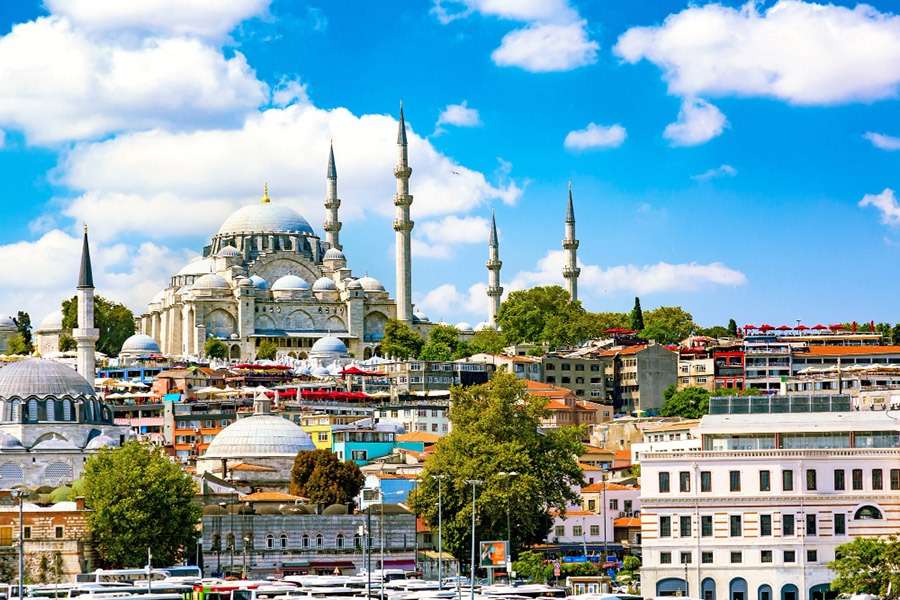
Istanbul can’t be understood in a single visit. It’s a city that reveals itself in layers, like an ancient scroll, if you know where to look. Beyond the usual routes like Hagia Sophia and the Grand Bazaar, there are neighborhoods where real life pulses through old walls, frescoes, and the smell of coffee. Balat, Fener, and Karaköy are three districts where history weaves into the everyday, and magic lives in the details.
Balat: Where Color Is the Voice of the Past
Balat is an old Jewish neighborhood, one of the most photogenic in Istanbul. It’s impossible to stay indifferent here: every street is like a canvas painted by time.
Colorful houses, crooked stairs, hanging laundry, children’s laughter, and coffee in a cezve on a stovetop by the door. Balat hasn’t been restored to sterile gloss — it breathes, smells, speaks. This isn’t an open-air museum; it’s a living organism.
This was once home to one of the largest Jewish communities of the Ottoman Empire. Today, that time is remembered through synagogues hidden behind gates, old shops, and family balconies from which someone, it seems, read the Torah just yesterday.
Fener: Greek Spirit on the Shores of the Golden Horn
Fener is a Greek neighborhood, a neighbor of Balat, often mentioned together with it. But it has its own atmosphere: more reserved, almost mystical. Here stands the Phanar Greek Orthodox College — resembling a castle from a novel. The red brick building is visible from afar and sets the tone for the entire area.
Once, Fener was home to an influential Greek diaspora. The residence of the Ecumenical Patriarch of Constantinople was located here, and the place still remains a religious center of Orthodoxy. The streets wind up and down, and in that unhurried rhythm, there’s something almost Athenian. You can turn a corner and find a Greek café serving Byzantine-style coffee and feel that you’re already in another world.
Karaköy: Street Art, Coffee, and the Spirit of a Port City
Karaköy is the junction of times. The district was a port area where merchants, sailors, and adventurers gathered. Today, it’s going through a renaissance: trendy coffee shops, street galleries, art spaces, and echoes of a European past are concentrated here.
Next to new art cafés and boutiques, you can find old Armenian churches and restored tenement buildings from the late 19th century. In Karaköy, the city reminds itself that it was once the capital of several empires.
By the way, Karaköy is a convenient starting point for a walking journey across the Galata Bridge. On one side — fishermen, on the other — a view of Sultanahmet. And behind your back — freshly ground coffee, bakeries, and the feeling that life here has always moved a bit faster than in the rest of the city.
5 Reasons to Discover These Neighborhoods
- Authenticity. Unlike tourist spots, Balat, Fener, and Karaköy preserve the features of real urban life without adapting to travelers’ expectations.
- Layered history. These districts are living encyclopedias, where Jewish, Greek, Armenian, and Turkish cultural codes coexist.
- Atmosphere. Narrow streets, sharp spice smells, street musicians, cats, balconies from which everything is seen and heard.
- Cuisine. Local places here are not for tourists, but for locals. Which means — tastier, warmer, more honest.
- Photogenic charm. Every corner is like a film still. Tiles, textures, signs, faces. These places make you want not just to see, but to remember them.
Where to Look for Istanbul’s Magic
Istanbul is not just minarets and ferries. Its magic lives where you don’t expect it. Balat, Fener, and Karaköy are three chapters of one great novel, best read on foot, with open eyes and without rushing. They don’t offer a postcard, but an experience. And in that lies their power.