




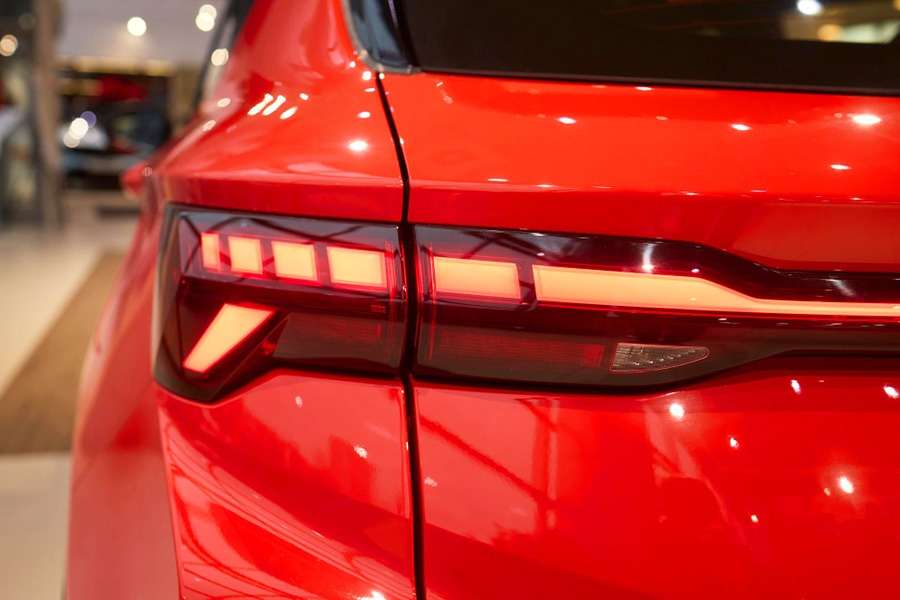
Rear lights are not just a design element of a car but an important part of its functionality and safety. Today, there are two popular types of rear lights on the market: LED (light-emitting diodes) and OLED (organic light-emitting diodes). Visually, OLED looks more futuristic and “expensive,” but is this price difference justified? Let’s break down how these technologies differ, their pros and cons, and who should consider OLED a reasonable purchase.
What Are LED and OLED: A Brief Overview of the Technologies
LED are inorganic light-emitting diodes. They operate through an electric current passing through a semiconductor material that emits light. These LEDs are used in most modern vehicles because they are bright, long-lasting, and relatively inexpensive.
OLED are organic light-emitting diodes. They are thinner, can emit light as a uniform surface, and do not require reflectors or lenses. OLED technology is actively used in the premium segment and has not yet become mainstream — mainly due to its high cost.
How to Distinguish LED and OLED Visually
- LED lights usually consist of dots or strips. The light comes from specific sources and can be directional.
- OLED optics look like a solid, smooth light field. They glow evenly and can take complex shapes.
This difference is noticeable at night — OLED looks cleaner and more modern, while LED can appear more “technical” but less elegant.
Advantages and Disadvantages of LED Optics
Pros:
- Availability. LED optics are installed even in budget cars.
- Reliability. LEDs last up to 50,000 hours.
- Brightness. Powerful light, well visible during the day.
- Energy efficiency. Consumes less power compared to incandescent bulbs.
- Well visible in bad weather.
Cons:
- Limited design freedom.
- A potential “dot” effect, which visually loses to OLED.
Advantages and Disadvantages of OLED Optics
Pros:
- Uniform lighting. The light looks like a single glowing panel.
- High aesthetics. Perfect for premium models.
- Compactness. Devices are thin and lightweight.
- Shape flexibility. Can create complex shapes and animations.
- Less glare. The light is softer and easier on the eyes.
Cons:
- Significantly higher cost.
- Complex repairs: often requires full unit replacement if damaged.
- Shorter lifespan compared to LED — about 20,000 hours.
- Performs worse in extreme temperatures.
LED vs OLED: Comparison by Key Parameters
| Parameter | LED | OLED |
|---|---|---|
| Brightness | High | Medium |
| Design | Limited | Flexible and premium |
| Price | Affordable | High |
| Reliability | Higher | Lower |
| Repairability | Usually simpler | Often requires full replacement |
| Power consumption | Low | Very low |
| Lifespan | Up to 50,000 hours | Up to 20,000 hours |
| Prestige/Impression | Modern | Luxurious and futuristic |
Who Should Pay Extra for OLED
If you are considering buying a car or replacing the rear optics, OLED may make sense in the following cases:
- You’re buying a premium vehicle. OLED highlights the status of the model and matches its level.
- Design matters to you. You want your car to look “more expensive” even at night.
- You rarely drive in extreme weather conditions. OLED performs worse in frost.
- You value uniqueness. Such lights are still rare and make your car stand out on the road.
If your priority is reliability, brightness, cost, and ease of replacement, LED is the better choice.
Conclusion
OLED truly impresses: uniform glow, slim body, premium appearance. But the extra cost can reach hundreds or even thousands of dollars. For most drivers, LED lights are the more practical and economical solution. OLED is primarily about style and the wow effect. It doesn’t make the car safer but makes it visually more appealing.
So, is it worth overpaying? If your car is more than just transportation — part of your image — maybe yes. In all other cases, LED is the smarter choice.