

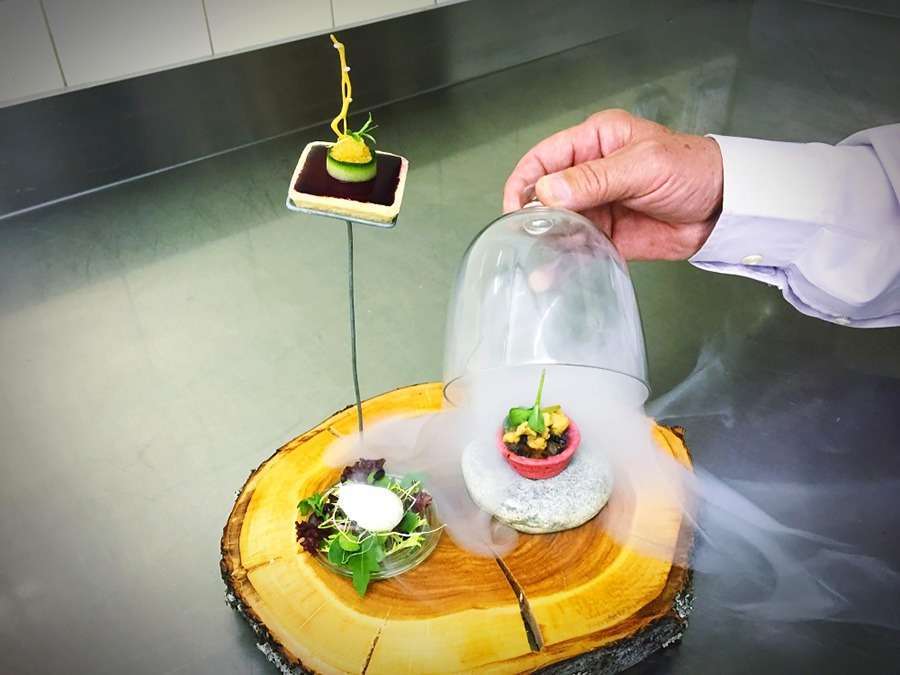
Molecular cuisine is a combination of science and culinary art that allows you to create dishes with effects that amaze the imagination. Fog rising from a plate, edible spheres, foams with unusual flavors — all this is the result of applying physics and chemistry in the kitchen. And although it seems that such experiments are only possible in expensive restaurants, in fact, many techniques can be recreated at home.
What is molecular cuisine?
Molecular cuisine is a branch of modern gastronomy that combines cooking and science. Its goal is to change the texture, shape, and even temperature of familiar foods, while keeping their taste authentic or creating new combinations.
To do this, special technologies and ingredients are used: nitrogen, agar-agar, lecithin, alginates, and other food additives. It is important to understand that molecular cuisine is not just about spectacle, but also about a deep understanding of the processes that occur with food during preparation.
Basic techniques of molecular cuisine
To start experimenting at home, it is enough to know a few basic methods:
1. Spherification
This is the transformation of liquids into jelly-like balls that resemble caviar. Sodium alginate and calcium are most often used for this purpose. The result is small “spheres” that burst in your mouth, releasing a bright flavor. For example, you can make “caviar” from orange juice or coffee.
2. Gels and foams
Thanks to agar-agar, gelatin, or lecithin, you can create light foams, sauces, and gels from any product. This not only adds new textures to dishes but also makes them look more appealing. For example, you can make coffee foam for dessert or a delicate fruit gel for salad.
3. Shock freezing
Liquid nitrogen is used to instantly cool food. This method allows you to create spectacular “smoke” and interesting textures. If you don’t have liquid nitrogen, you can use dry ice — it’s safer for home experiments, but also gives a stunning visual effect.
What you need for molecular cuisine at home
You can start with a minimal set of equipment:
- kitchen syringes or pipettes for creating spheres;
- molds and silicone molds;
- scales for accurate dosing of ingredients;
- special food additives (agar-agar, alginates, lecithin).
Most of the necessary ingredients can be found in online stores for chefs or in large supermarkets.
Tips for beginners
- Start with simple recipes, such as fruit foam or coffee caviar.
- Follow the proportions — molecular cuisine requires precision.
- Use fresh ingredients, because taste is still the most important factor.
- Don’t be afraid to experiment: even a simple dessert can be turned into a masterpiece.
Molecular cuisine at home is a great opportunity to discover a new world of gastronomy, surprise your friends and loved ones, and most importantly, express your creativity. It makes ordinary dishes unique and allows you to combine science with the culinary arts. Try a few simple techniques, and your kitchen will turn into a real laboratory for gourmets.