




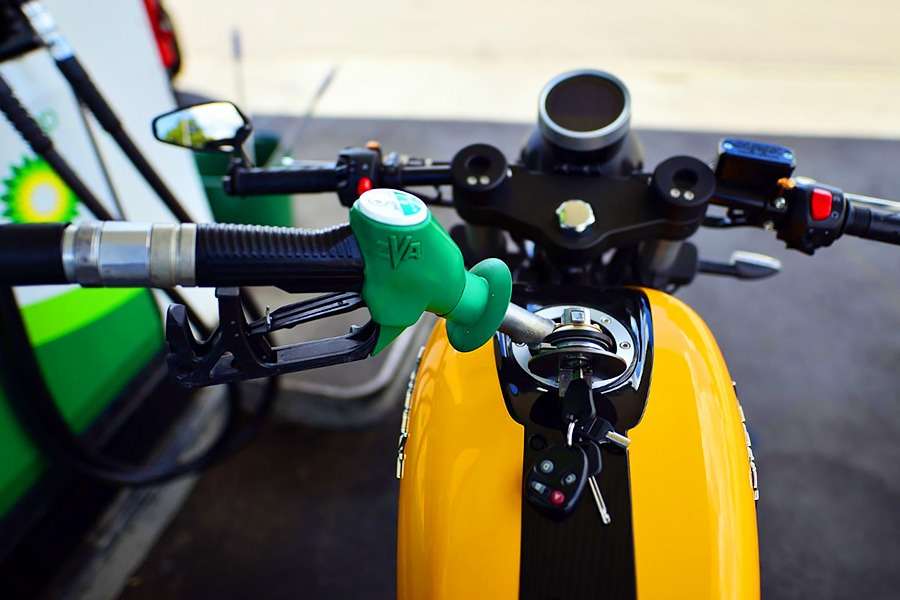
Choosing gasoline for a motorcycle seems simple. You fill up with whatever is available at the nearest gas station and ride off. But fuel affects engine life, performance, mileage and even safety. To keep your motorcycle running smoothly and reliably, it is important to understand a few basic things. No formulas and no complicated chemistry, only clear explanations and practical advice.
What an octane rating is and why you need it
The octane rating shows how resistant the fuel is to detonation. Put simply, it is the ability of gasoline to burn smoothly without pops and impacts inside the cylinder.
- 92 is suitable for engines with a medium compression ratio.
- 95 is chosen by owners of modern street and touring models.
- 98 is needed only for those who have a high compression ratio or a sports engine.
The main rule is to use the octane rating specified in the manual. You can fill gas with a higher rating, but usually there is no point. You will not get more power or better performance. But you will pay more.
Why a low octane rating is dangerous
If you fill gasoline with a lower rating than recommended, the engine may start to detonate. This shows up as a sharp metallic knock under load. Detonation destroys pistons, raises temperature and leads to expensive repairs. Sometimes owners make the mistake of thinking detonation is something temporary and harmless. In reality it harms the engine every time you open the throttle.
If after accidentally filling the wrong gasoline the engine starts making noise and jerking, it is better to reduce the load, reach the nearest gas station and dilute the bad fuel with the proper one.
The number matters, but so does the quality
Two types of gasoline with the same octane rating can be completely different in quality. At poor gas stations the fuel often contains water, impurities, sulfur and cheap additives. As a result the spark plugs get covered with carbon deposits, the engine loses power and mileage increases.
Signs of problematic gasoline:
- the motorcycle starts poorly
- the revs fluctuate
- the engine stalls at idle
- the throttle response hesitates during acceleration
- you notice the smell of raw fuel
If this happened right after filling up, the gasoline is most likely the cause. It is better to drain it and replace it.
Can you use gasoline with additives
There are many additives on the market that promise more power, lower fuel consumption and a cleaner system. Some of them really help, but only if the motorcycle has clear problems. If the fuel system is functioning normally, constant use of additives will not bring any benefit.
There is one reasonable preventive option. Use mild cleaning additives from well known brands every 5 thousand kilometers. They help remove light deposits and do not harm the system. All other miracle products are better avoided.
How to choose the right gas station
The ideal strategy is simple. Fill up where there are many cars and motorcycles. High traffic means rapid fuel turnover, which prevents it from getting stale. Large chain stations are more likely to maintain stable quality and real oversight.
If you are traveling through regions with little choice, it is wise to carry a small fuel cleaner in case you come across bad gasoline. It will not fix every problem but it will help soften the effects.
Does mileage depend on gasoline
Yes, quite noticeably. The lower the fuel quality, the higher the consumption. The reason is simple. Poor gasoline does not burn completely, which means the engine has to work harder. If you suddenly notice that the motorcycle is consuming a liter more than usual, think about where you last filled up.
When it makes sense to switch to another gasoline
Switching to a different octane rating makes sense in three cases:
- You bought a motorcycle that requires a different type of fuel.
- You changed the engine configuration, raised the compression ratio or installed tuning.
- You constantly hear signs of detonation.
If the reason is tuning, switching to higher octane gasoline is mandatory. If the engine works normally, the right gasoline is always the one specified in the manual.
Choosing gasoline affects the life of your motorcycle no less than timely maintenance. Keep three simple rules in mind. Follow the manufacturer’s recommendations, choose good gas stations and do not experiment without a reason. Then the engine will run smoothly and your rides will bring joy, not problems.